“Morning, ummm I’m kind of tired of my usual, what drink would you recommend that is a bit different and just refreshing compared to my usual latte?”
“Well, it depends on if you’re craving something sweet, I could make you a mochacchino- a cross between a mocha and a cappuccino it gives you a sweeter taste with that hit of caffeine…”
“Uh… not feeling anything sweet for once”
“A chai tea latte would probably satisfy your craving then, it’s spicy, creamy and with a hint of sweetness”
“Okay, I can handle spice- I’ll try it!”
In the last few years, chai has been cropping up on more and more menus in cafes across London. Whether it’s a masala chai latte, dirty chai or iced chai… it’s everywhere!
But the understanding of its origin, the cultural values or even just knowing the ingredients is not as common, with some people saying ‘chai tea’ when in fact those two words mean the same thing.
It’s clear that there is a disconnect between chai in the Western world and its birth in Asia so let’s go back to China, around 1500 years ago…
Tea leaves were mistakenly discovered as an herbal remedy in 2737 BC by Chinese Emperor, Shen Nung, who noticed that his ailment was magically cured by drinking the water after boiling the leaves of Camellia sinensis (a species of small tree widely grown everywhere now). This discovery led to years of dedicated tea culture with tea being the subject of poetry, books and art. Notably, The Seven Bowls of Tea, a poem by Lu Tong, became popular and he devoted all his life’s poetry to the art of tea.
Forward to the 1600s, Camellia sinensis became a well-desired commodity around the world, with China as the leader in tea exportation. After the Dutch traders brought the fashion of tea drinking to Europe, it spread through to English aristocrats, igniting a trend. The tea monopoly was very much in the palm of China until the rise in costs and the Opium War.
Then came along the British East India Company’s plot to topple China’s global standing. Scottish botanist Robert Fortune disguised himself as a Chinese nobleman and entered China’s tea regions. Taking back samples of Camellia sinensis, various manufacturing processes and brewing secrets, he hoped to recreate production in Assam and Darjeeling in India.

India’s warm and humid climate stopped the tea leaves from flourishing which led the Indian Tea Committee to seek out a local alternative, where they could apply the Chinese processes of picking, drinking and fermenting to create a tea of their own. Assam soon had many tea plantations, fronted by the East India Company, which eventually led to the takeover of the tea industry from the Chinese to the British. By 1910, exports from China had dropped from an impressive 90% to a distasteful 5%, crowning India the world’s leader in tea manufacturing. Currently, Sri Lanka is the largest exporter due to their ability to pluck the whole year round.
Despite its global demand, Indians still disliked tea due to its high cost and bitter taste. While propaganda, tea demonstrations and the message that a day was ‘incomplete’ without tea (an ideology very much established in India today) were successful in persuading more people to drink tea, it was the addition of spice that really changed the game!
Street vendors started adding spices such as ginger, cinnamon and cardamom to enhance the flavour while keeping the tea use minimal and therefore less expensive. The mixing of Indian spices and Chinese tea merges two ancient traditions. Over 5000 years ago, a king used Ayurvedic practices to create an immunity-boosting drink known as Kadha that would heal and cleanse the body. This concoction of spices is now used to make masala tea, a sweet drink that also rejuvenates the mind and body.

With the recipe evolving in every country and in each family, Chai has grown even more personal with its unique variations. While I personally only drink tea on occasion, it is brewed daily in my house and is a reminder of all things comforting and warm. Chai is something served by your grandparents when you feel sad, and just the smell of it transports you to simpler times. In most homes, chai is served multiple times a day, acting as a colourful thread that weaves through our lives.
Chai is also a reoccurring segment in films, with lovers breaking the ice for the first time over a cup of masala tea or a child sharing their difficulties with their teacher, small teacup in hand, showcasing how chai nurtures those moments.
So, where do we go from here?
Authentic appreciation blossoms when companies and cafes see Chai’s cultural significance rather than it being just an item on their menu. This can also extend to other items such as coffee beans, cacao powder and matcha. People often buy a product for what it is or serves, but truly value a story and a nod to heritage.
An example of a café doing it right is Chai Guys! After having gone to India for several months to do some field research, founders Abhilash Jobanputra and Gabriel Unger, have been able to recreate an authentic experience that people crave here in London. I am yet to visit their Notting Hill bakehouse, but it is very high on my list.
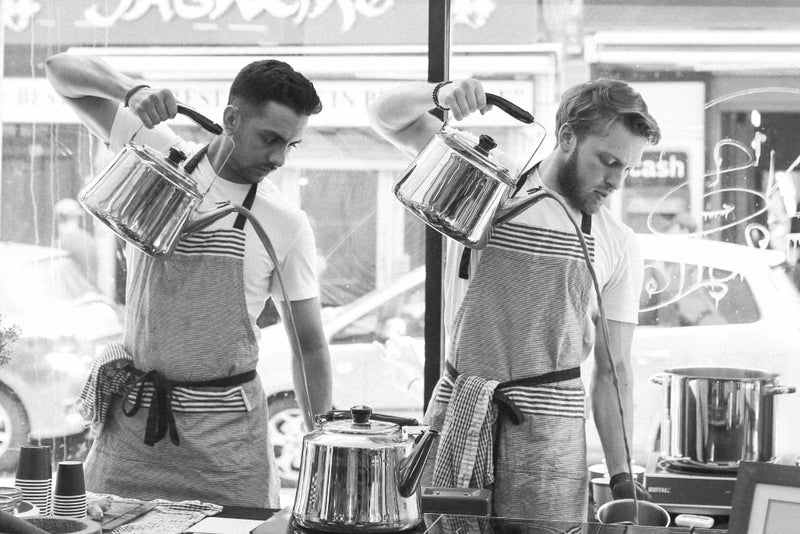
Spreading the magic and warmth of Chai is an honest mission and it deserves to be known and understood everywhere.
If you’ve enjoyed reading my blog posts so far, please subscribe so you never miss one, thank you for tuning in and I hope my next piece brings you back to The Imprint!
Check out Chai Guys’ take on making Chai at home here!

 The Imprint
Leave a comment